
Decoding CDP-6001: Advanced Insights for ML Engineers
The Cloudera CDP-6001 certification stands as a pivotal credential for machine learning engineers aiming to validate and advance their expertise within the Cloudera Data Platform ecosystem. This certification is specifically designed for professionals who architect, develop, and deploy scalable machine learning solutions, showcasing a deep understanding of Cloudera's robust data infrastructure. Pursuing the CDP-6001 signifies a commitment to mastering the intricate balance between data science principles and enterprise-grade operationalization, directly addressing the complexities of large-scale ML workflows. This advanced guide offers comprehensive insights into the certification's value, the practical skills it validates, and strategic preparation approaches crucial for success, equipping ML engineers with the knowledge to excel.
Establishing Foundational Expertise in Cloudera Machine Learning
Mastering the CDP-6001 certification solidifies an ML Engineer's ability to navigate the sophisticated landscape of distributed machine learning within Cloudera's environment. This validation demonstrates proficiency in leveraging the Cloudera Data Platform (CDP) to manage the entire ML lifecycle, from data ingestion and preparation to model training, deployment, and monitoring. For any ML professional, understanding how to operationalize models in a production setting is paramount, and the CDP-6001 focuses on this critical capability, bridging the gap between theoretical knowledge and practical application in an enterprise context.
The certification underscores the importance of not just building models, but building them to scale, securely, and efficiently. It encompasses a range of competencies essential for creating impactful ML solutions that drive business value. By focusing on the Cloudera ecosystem, candidates prove their readiness to work with industry-leading tools and practices for big data machine learning. Gaining official validation through such a rigorous exam is a clear differentiator in a competitive market, signaling to employers a strong command of modern ML operations.
The Strategic Value for ML Professionals
For machine learning engineers, the CDP-6001 serves as a benchmark for advanced proficiency in a specialized, high-demand domain. It signals to employers and peers that a certified individual possesses not only theoretical knowledge but also the practical skills required to implement complex ML projects on the Cloudera Data Platform. This translates into tangible career benefits, enhancing job prospects, salary potential, and opportunities for leadership roles in data-driven organizations. Investing in this certification is a strategic move to future-proof one's career in an evolving technological landscape.
-
Validated Competence: Proves hands-on ability to design, build, and operationalize machine learning pipelines on CDP.
-
Industry Recognition: Cloudera is a leading vendor in enterprise data management, making its certifications highly respected.
-
Career Advancement: Opens doors to senior ML Engineer, MLOps Engineer, or Lead Data Scientist roles.
-
Increased Earning Potential: Certified professionals often command higher salaries due to specialized skills.
-
Enhanced Credibility: Builds trust with stakeholders by demonstrating a verified skill set.
Key Responsibilities Aligned with CDP-6001 Readiness
The preparation for CDP-6001 naturally aligns with the core responsibilities of a Cloudera Machine Learning Engineer, focusing on practical challenges encountered in real-world scenarios. Candidates are expected to internalize the principles of data governance, security, and resource management within a multi-tenant environment. This holistic approach ensures that certified professionals are not merely developers but architects of robust, production-ready machine learning systems, capable of handling diverse data types and complex computational demands effectively.
Success on the exam also implies a deep understanding of optimizing ML workloads for performance and cost-efficiency. This includes selecting appropriate computing resources, managing dependencies, and employing best practices for version control and collaborative development. These are skills that resonate directly with the day-to-day tasks of an advanced ML Engineer, making the certification a direct reflection of real-world operational capability. Learn more about the Cloudera certification pathway directly from the official source.
Architecting Robust Machine Learning Solutions on Cloudera
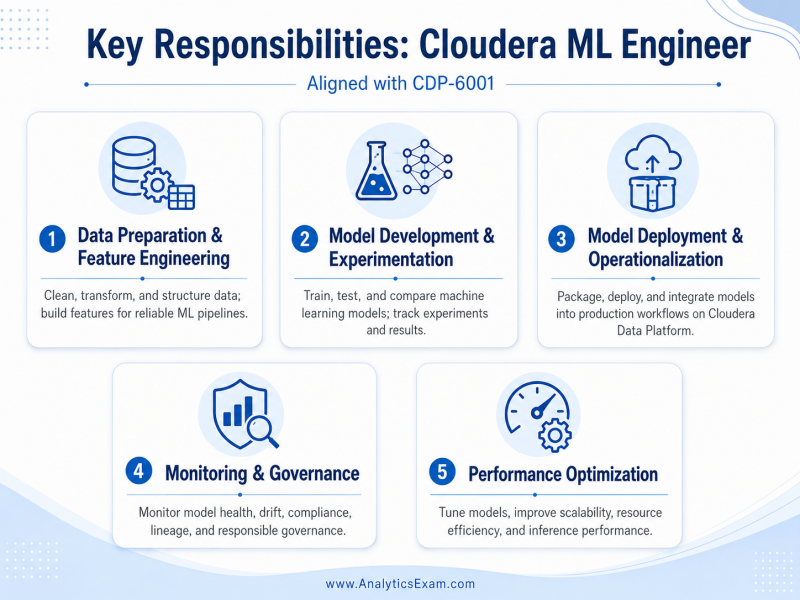
The essence of the CDP-6001 certification lies in an ML Engineer's capacity to design and implement end-to-end machine learning pipelines on the Cloudera Data Platform. This involves a comprehensive understanding of how various CDP components interoperate to support the entire ML lifecycle, from initial data exploration to continuous model monitoring and retraining. Candidates must demonstrate proficiency in selecting the right tools and frameworks within CDP for specific tasks, ensuring scalability, security, and maintainability of their solutions.
A key focus is on orchestrating complex workflows, potentially involving data transformation using Apache Spark, model development with popular ML libraries, and deploying models as APIs or batch processes. This requires more than just coding skills; it demands a strategic mindset to anticipate challenges, optimize resource usage, and build resilient systems that can adapt to changing data and business requirements. The exam evaluates this architectural thinking, pushing candidates beyond basic model building to sophisticated system design.
Leveraging Cloudera Data Science Workbench for ML Development
A significant aspect of preparing for CDP-6001 involves hands-on proficiency with the Cloudera Data Science Workbench (CDSW). This integrated environment is central to the development and deployment phases of machine learning projects within Cloudera. Candidates must be adept at using CDSW for interactive data exploration, collaborative coding, training models with various machine learning frameworks, and managing experiments through tools like MLflow. Its role in streamlining the ML workflow makes it an indispensable tool for any Cloudera ML Engineer.
CDSW's capabilities extend to resource allocation, environment management, and secure access to data. ML Engineers should understand how to configure compute resources, manage dependencies for different projects, and leverage its integration with other CDP services. This mastery is crucial for efficient development, ensuring that models are built, tested, and iterated upon effectively, and that computational resources are utilized optimally without compromising security or governance policies. The workbench also facilitates seamless collaboration among data scientists and engineers.
Integrating Advanced ML Concepts within CDP
The CDP-6001 expects ML Engineers to apply advanced machine learning concepts within the practical constraints and capabilities of the Cloudera Data Platform. This includes an understanding of distributed training techniques, hyperparameter tuning at scale, feature engineering, and dealing with large datasets effectively. Proficiency in these areas translates into the ability to build high-performing models that can tackle real-world enterprise problems, moving beyond academic exercises to production-grade solutions.
Furthermore, candidates should be familiar with common ML operational patterns, such as A/B testing deployed models, blue-green deployments, and rollback strategies. The ability to implement these within the CDP framework, utilizing services like Apache Atlas for data governance and Apache Ranger for security, demonstrates a holistic understanding of MLOps. This ensures that the ML solutions are not only effective but also robust, auditable, and compliant with enterprise standards.
Cultivating Practical Skills for CDP-6001 Readiness
Achieving the CDP-6001 certification hinges not just on theoretical knowledge, but critically on hands-on practical skills in building and managing machine learning workflows within Cloudera Data Platform. This involves extensive experience with the core components and a deep understanding of how to translate business problems into scalable ML solutions. Practical application is the cornerstone of effective preparation, allowing candidates to internalize complex concepts through real-world problem-solving.
Focusing on practical skill development means spending considerable time in actual Cloudera environments, experimenting with different data types, model architectures, and deployment strategies. This iterative process of building, testing, and refining ML pipelines solidifies the understanding of Cloudera's ecosystem. Engineers should seek opportunities to work on diverse projects that expose them to various aspects of the ML lifecycle, enhancing their ability to troubleshoot and optimize solutions under different conditions.
Building Hands-On Application and Problem-Solving Acumen
True mastery for the CDP-6001 exam is demonstrated through the ability to apply learned concepts to solve real-world machine learning challenges on the Cloudera platform. This means candidates must move beyond rote memorization of concepts and engage actively in coding, debugging, and optimizing ML workflows. Practical exercises, mini-projects, and case studies are invaluable in developing this problem-solving acumen, preparing individuals for the scenario-based questions that often characterize advanced certification exams.
Specific areas for hands-on practice should include data manipulation with distributed frameworks like Apache Spark, model training using libraries such as TensorFlow or PyTorch within CDSW, and deploying models via REST APIs using tools like Flask or FastAPI in a containerized environment. Emphasizing experimentation with different dataset sizes and complexities will further strengthen an engineer's capability to handle varied production demands. These experiences are fundamental to developing an intuitive grasp of how the platform behaves under load and during failure conditions.
Utilizing CDP-6001 Practice Questions for Assessment
As part of a comprehensive preparation strategy, engaging with CDP-6001 practice questions is indispensable for assessing one's readiness. These questions help candidates understand the exam format, identify knowledge gaps, and become accustomed to the type of scenarios presented in the actual test. While practice questions are a valuable tool, their primary purpose is diagnostic, guiding further study rather than serving as a shortcut to passing.
It is crucial to approach practice questions not just to get the right answer, but to understand the underlying principles and reasoning behind each solution. Analyzing incorrect answers can be as educational as getting the correct ones, revealing areas that require deeper conceptual understanding or more hands-on experience. Utilize platforms that offer sample questions that mirror the exam's rigor to build confidence and refine test-taking strategies. For additional sample questions, visit Cloudera CDP-6001 Exam Sample Questions to further test your knowledge.
Strategizing an Effective Preparation for CDP-6001
A successful journey to the CDP-6001 certification demands a well-structured and disciplined preparation strategy. Given the technical depth and practical focus of the exam, candidates must move beyond passive learning and actively engage with the Cloudera Data Platform. This involves a combination of theoretical study, extensive hands-on practice, and strategic review to ensure all relevant competencies are thoroughly addressed. A robust plan allows ML engineers to manage their time effectively and build confidence progressively.
The ideal preparation integrates learning from various sources, ensuring a holistic understanding of the subject matter. This includes official Cloudera documentation, online training courses, practical labs, and community discussions. It's about building a solid foundation in core ML concepts and then systematically layering on the specifics of their implementation within the Cloudera ecosystem. An effective strategy is adaptable, allowing for adjustments based on individual learning pace and areas requiring more focus.
Crafting a Comprehensive Study Plan for CDP-6001
Developing a detailed study plan is the backbone of CDP-6001 exam preparation. This plan should delineate specific topics to cover, allocate dedicated study blocks, and integrate hands-on lab sessions to reinforce theoretical knowledge. Given that the input specifies an "Advanced Guide," the emphasis should be on deep understanding rather than surface-level memorization, ensuring candidates can apply concepts to complex scenarios. A well-designed plan acts as a roadmap, guiding the engineer through the vast technical landscape.
Consider breaking down the preparation into manageable modules, focusing on key areas such as data ingestion and processing for ML, model development and experimentation, deployment and operationalization, and monitoring and governance within CDP. Each module should include both conceptual learning and practical exercises. Regularly scheduled review sessions and self-assessment through practice questions are also vital components of an effective study plan, helping to track progress and identify areas for improvement. Access comprehensive study resources and preparation guides for CDP-6001 at AnalyticsExam.com.
Leveraging Official and Complementary Study Materials
For the CDP-6001 exam, leveraging official Cloudera CDP Machine Learning training course materials is often the most direct path to understanding the vendor's intended curriculum and best practices. These courses typically provide structured content, labs, and insights directly from the creators of the platform. However, official training should be complemented by broader study material to ensure a comprehensive grasp of underlying machine learning and distributed computing principles.
Additional resources like reputable online courses, technical blogs, and open-source documentation for frameworks such as Apache Spark, TensorFlow, and Kubernetes are invaluable. Engaging with the Cloudera community forums can also provide practical tips, insights into common challenges, and opportunities to clarify difficult concepts. The goal is to build a robust knowledge base that goes beyond just passing the exam, equipping the engineer with skills for real-world application.
Evaluating the MLOps Landscape within Cloudera CDP
Understanding the MLOps landscape within Cloudera CDP is fundamental for any ML Engineer preparing for the CDP-6001 certification. This domain extends beyond merely training models to encompassing the entire operational lifecycle, ensuring that machine learning models are developed, deployed, and maintained reliably and efficiently in production. The certification implicitly validates an engineer's ability to implement robust MLOps practices, which are critical for sustainable AI initiatives in an enterprise environment.
Effective MLOps on Cloudera involves automated pipelines for data versioning, model versioning, continuous integration/continuous delivery (CI/CD) for ML artifacts, and automated retraining strategies. Candidates should demonstrate a nuanced understanding of how to leverage CDP's integrated services to achieve these objectives. This includes managing experiment tracking with MLflow, containerizing workloads with Docker and Kubernetes, and automating workflows using tools like Apache Airflow, all within the secure and governed framework of Cloudera Data Platform.
Integrating Monitoring and Governance in ML Workflows
A key aspect of advanced MLOps, deeply relevant to CDP-6001, is the integration of comprehensive monitoring and governance into every ML workflow. Monitoring involves tracking model performance, data drift, and infrastructure health to detect and address issues proactively. This ensures that deployed models continue to deliver accurate predictions and maintain their integrity over time. ML Engineers must be proficient in setting up alerts and dashboards within the CDP environment to gain real-time insights into their ML systems.
Governance, on the other hand, ensures compliance, auditability, and responsible AI practices. This includes managing access controls with Apache Ranger, tracking data lineage with Apache Atlas, and adhering to organizational policies for model fairness and explainability. Demonstrating the ability to implement these governance measures within CDP is a critical skill for the CDP-6001 candidate, showcasing their readiness to build trustworthy and ethical AI solutions in a regulated enterprise setting.
Scalability and Performance Optimization for Enterprise ML
For ML Engineers working with Cloudera, optimizing for scalability and performance is not merely an advantage but a necessity. The CDP-6001 certification validates the ability to design machine learning solutions that can handle vast datasets and high-throughput prediction requests without compromising on latency or resource efficiency. This involves making informed decisions about data partitioning, choosing appropriate distributed processing frameworks, and optimizing model inference paths.
Candidates are expected to understand how to leverage the distributed computing capabilities of CDP, such as Apache Spark, for efficient data processing and model training. They should also be skilled in optimizing their code, selecting suitable hardware configurations, and implementing caching strategies to enhance performance. The ability to troubleshoot performance bottlenecks and fine-tune ML applications for maximum throughput and minimal cost is a highly valued skill for advanced ML engineers within the Cloudera ecosystem.
Overcoming CDP-6001 Challenges and Pitfalls
Successfully navigating the CDP-6001 exam requires an awareness of common challenges and pitfalls that candidates often encounter. Beyond the technical complexities, effective exam preparation involves managing expectations, cultivating consistent study habits, and adopting ethical practices. Understanding these hurdles beforehand allows ML engineers to formulate strategies to mitigate risks and maintain a focused approach throughout their certification journey.
One significant challenge is the breadth and depth of knowledge required, spanning core machine learning, distributed computing, and Cloudera-specific tools. Another is the need for substantial hands-on experience, which cannot be replaced by theoretical study alone. Candidates must also be vigilant against unethical study practices, ensuring their preparation leads to genuine skill acquisition rather than superficial knowledge.
Embracing Ethical Study Practices for Certification Integrity
In the pursuit of any professional certification, especially one as rigorous as CDP-6001, upholding ethical study practices is paramount. The integrity of the certification, and ultimately the value it brings to an individual's career, relies entirely on honest and diligent preparation. Relying on unauthorized "dumps" or illegally shared exam content not only undermines the purpose of certification but also risks disqualification and reputational damage.
True mastery comes from understanding concepts, applying them practically, and developing problem-solving skills, which dumps cannot provide. Instead, candidates should focus on official training, reputable study materials, and legitimate practice questions that help gauge readiness and identify learning gaps. Embracing ethical study practices ensures that the CDP-6001 certification genuinely reflects an ML Engineer's capabilities and commitment to professional excellence. This commitment is often a key requirement outlined in any Cloudera CDP Machine Learning Engineer exam requirements documentation.
Navigating Common Hurdles in Advanced Certification Preparation
Advanced certifications like CDP-6001 present unique hurdles that extend beyond just technical content. Time management is often a major challenge for busy professionals, requiring careful scheduling and adherence to a consistent study routine. The sheer volume of material can also be overwhelming, necessitating a structured approach to learning and review, breaking down complex topics into digestible segments.
Another common pitfall is underestimating the importance of hands-on lab work. Many candidates focus heavily on theory but lack the practical experience needed to confidently tackle scenario-based questions. Overcoming this involves dedicating significant time to practical exercises, building projects, and troubleshooting issues within a real Cloudera environment. Finally, managing exam anxiety through mock tests and familiarization with the testing environment can significantly improve performance on the actual exam day.
Conclusion: Empowering ML Engineers with CDP-6001 Mastery
The CDP-6001 certification offers machine learning engineers a powerful validation of their advanced skills in building and deploying scalable ML solutions on the Cloudera Data Platform. It represents a commitment to technical excellence and operational proficiency, distinguishing professionals who can effectively navigate the complexities of enterprise-grade machine learning. By investing in this certification, ML engineers not only enhance their individual capabilities but also contribute significantly to their organizations' data-driven innovation initiatives.
Achieving CDP-6001 mastery is a journey that cultivates deep technical acumen, fosters strategic thinking in MLOps, and unlocks new career opportunities. It’s about being prepared for the evolving demands of the AI landscape, ensuring that ML solutions are not just intelligent but also robust, secure, and production-ready. This credential empowers engineers to lead complex projects, innovate with confidence, and drive real business impact through cutting-edge machine learning.
For ML engineers seeking to elevate their careers and validate their expertise, the CDP-6001 certification is an invaluable asset. Begin your structured preparation today by exploring comprehensive study materials, practice questions, and expert guides available at AnalyticsExam.com to ensure you're fully equipped for success.
Frequently Asked Questions
1. What is the Cloudera CDP-6001 certification?
The Cloudera CDP-6001 certification validates an ML Engineer's advanced skills in designing, developing, and operationalizing machine learning solutions within the Cloudera Data Platform (CDP) ecosystem. It confirms expertise in managing the full ML lifecycle in an enterprise environment.
2. Who should pursue the CDP-6001 exam?
The CDP-6001 exam is ideal for experienced machine learning engineers, data scientists, and MLOps professionals who work with Cloudera Data Platform and aim to demonstrate their proficiency in building and deploying scalable, secure, and production-ready ML applications.
3. What are the primary career benefits of earning the CDP-6001 certification?
Earning the CDP-6001 certification can significantly boost career prospects by validating specialized skills, leading to enhanced job opportunities, increased earning potential, and greater credibility in roles such as Senior ML Engineer, MLOps Lead, or AI Architect within data-driven organizations.
4. How should I best prepare for the CDP-6001 exam?
Effective preparation for CDP-6001 typically involves a combination of theoretical study from official Cloudera resources and complementary materials, extensive hands-on experience with Cloudera Data Platform, and diligent practice with sample questions to assess readiness and identify knowledge gaps.
5. What kind of Cloudera Data Platform Machine Learning concepts are covered indirectly?
While specific syllabus details are not publicly shared, the certification generally implies coverage of concepts vital for an ML Engineer on CDP, including data ingestion/preparation, distributed model training, model deployment, MLOps practices, security, governance, and performance optimization within the Cloudera ecosystem.
- Cloudera Certification |
- CDP-6001 |
- CDP-6001 Questions |
- CDP-6001 Sample Questions |
- CDP-6001 Questions and Answers |
- CDP-6001 Test |
- Cloudera CDP Machine Learning Engineer Online Test |
- Cloudera CDP Machine Learning Engineer Sample Questions |
- Cloudera CDP Machine Learning Engineer Exam Questions |
- Cloudera CDP Machine Learning Engineer Simulator |
- CDP-6001 Practice Test |
- Cloudera CDP Machine Learning Engineer |
- Cloudera CDP Machine Learning Engineer Certification Question Bank |
- Cloudera CDP Machine Learning Engineer Certification Questions and Answers |
- CDP-6001 Study Guide |
- CDP-6001 Certification |
- CDP-6001 Syllabus |
- Exam CDP-6001 Study Material |
- CDP-6001 Books |
- Cloudera CDP Machine Learning Engineer Syllabus |
- Cloudera CDP Machine Learning Engineer Mock Test |
- Cloudera CDP Machine Learning Engineer Books |
- Cloudera CDP Machine Learning Engineer Training |
- CDP-6001 PDF |
- Cloudera CDP Machine Learning Engineer Quiz |
- CDP-6001 Simulator


