
TDCCI Certification Readiness: Qlik Implementer Path
The Qlik Talend Data Catalog Implementer (TDCCI) certification validates a professional's expertise in deploying, configuring, and managing Talend Data Catalog solutions. This credential is designed for data architects, data engineers, and data governance specialists responsible for implementing robust metadata management and data governance frameworks. This comprehensive article delves into the core aspects of the Qlik TDCCI certification, outlining the exam structure, key syllabus areas, strategic preparation approaches, and the significant career advantages it offers in the evolving data landscape. Professionals seeking to solidify their skills in data catalog implementation will find this roadmap invaluable for navigating their certification journey.
Validating Expertise: The Qlik TDCCI Certification Exam
Earning the Qlik TDCCI certification signifies a proven ability to leverage Talend Data Catalog for effective metadata management and data governance within an organization. This certification establishes a candidate's proficiency in practical implementation tasks, ranging from metadata harvesting to advanced model management. The exam details provide a clear framework for candidates to prepare and understand the assessment criteria.
The Qlik Talend Data Catalog Implementer certification exam, designated by the code TDCCI, comprises 55 questions designed to be completed within a 90-minute duration. Candidates must achieve a passing score of 65% to successfully obtain the certification. The exam fee is $250 (USD), reflecting the investment in validating specialized skills in a high-demand field. Understanding these parameters is crucial for candidates planning their study schedule and exam registration.
Core Competencies: Qlik Talend Data Catalog Implementer Syllabus
The Qlik TDCCI certification syllabus outlines the critical knowledge and skills required for effective Talend Data Catalog implementation. This structured curriculum ensures candidates are well-versed in the comprehensive functionalities of the platform, from foundational concepts to advanced API interactions. Mastery of these areas is essential for anyone aiming to pass the exam and apply their expertise in real-world scenarios.
The key areas covered in the Qlik TDCCI syllabus include:
-
Overview of Talend Data Catalog: This section introduces the fundamental architecture, components, and primary objectives of the Talend Data Catalog. Candidates are expected to understand its role in enterprise data landscapes and how it supports data discovery and governance.
-
Managing User Roles and Tasks: Implementers must understand how to configure and manage user permissions, roles, and responsibilities within the Talend Data Catalog environment. This ensures secure and efficient collaboration among different data stakeholders.
-
Harvesting Metadata: A cornerstone of data catalog implementation, this topic covers the various methods for extracting metadata from diverse data sources. It includes:
-
Configuring data models to represent organizational data structures.
-
Utilizing bridges for connecting to different systems and extracting metadata.
-
Profiling data to understand its quality, characteristics, and content.
-
Implementing data masking techniques for sensitive data protection.
-
Automating metadata harvesting processes for efficiency.
-
Managing versioning of metadata to track changes over time.
-
-
Stitching Metadata and Reports: This involves linking disparate metadata elements to create a unified view and generating reports that provide insights into the data landscape, compliance, and usage patterns.
-
Model Management: Understanding how to define and manage conceptual, logical, and physical data models within the catalog. This includes working with:
-
Concepts and terms to establish a common business vocabulary.
-
Definitions that clarify the meaning and usage of data elements.
-
Custom attributes to extend metadata beyond standard fields.
-
Semantic types for classifying data based on its business meaning.
-
-
Defining Semantic Lineage: Tracing the complete lifecycle of data, from its origin through transformations and usage. This capability is vital for impact analysis, regulatory compliance, and understanding data trustworthiness.
-
Mapping, Tracing, and Analyzing Data Flow: This section focuses on visualizing and understanding how data moves and changes across various systems. Implementers learn to create and interpret data flow diagrams for troubleshooting and optimization.
-
Working Collaboratively Using Social Catalog and Glossary Workflow: Leveraging the collaborative features of Talend Data Catalog, including social interactions, annotations, and formal workflow processes for managing business glossary terms and definitions.
-
Managing Metamodel and Data Modeling: Advanced concepts related to customizing the catalog's metamodel to accommodate unique organizational requirements and applying data modeling best practices within the tool.
-
Accessing Talend Data Catalog REST API: Utilizing the RESTful API for programmatic interaction with the catalog, enabling integration with other systems and automation of catalog management tasks.
-
Managing Data Classes: Defining and managing data classifications to categorize and govern data based on its sensitivity, compliance requirements, or business domain. This is fundamental for enforcing data policies.
Each of these topics directly addresses the practical skills required to implement and maintain a functional and effective Talend Data Catalog solution, reinforcing why Qlik's official resources are essential for preparation.
Strategic Advantages: Why Pursue TDCCI Credentialing
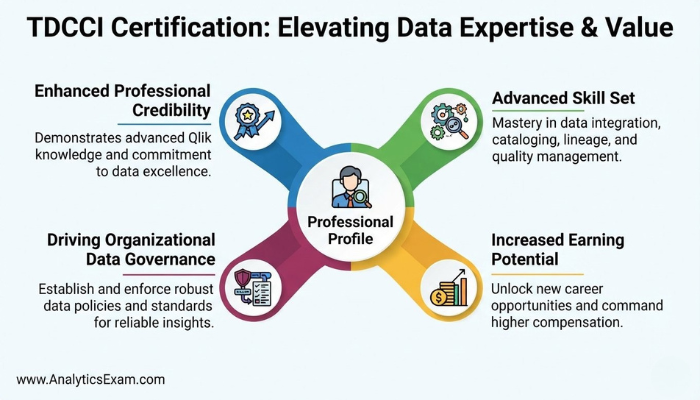
Earning the Qlik TDCCI certification offers numerous strategic advantages for data professionals operating in increasingly complex data environments. This credential serves as a powerful testament to an individual's specialized skill set, differentiating them in a competitive job market and opening doors to advanced career opportunities. The benefits extend beyond personal career growth, impacting organizational efficiency and compliance.
Enhanced Professional Credibility and Recognition
Achieving the Qlik TDCCI certification immediately elevates a professional's standing. It provides concrete proof of their ability to implement sophisticated data catalog solutions, a skill highly valued by organizations striving for better data governance and data literacy. This recognition can lead to greater trust from employers and peers, solidifying one's reputation as an expert in the field.
Advanced Skill Set for Modern Data Challenges
The certification process inherently deepens an implementer's understanding of Talend Data Catalog's full capabilities. This includes intricate aspects of metadata harvesting, semantic lineage, and API integration, which are crucial for addressing contemporary data challenges such as regulatory compliance (e.g., GDPR, CCPA), data quality improvement, and fostering a data-driven culture. Professionals emerge with a more robust and adaptable skill set.
Increased Earning Potential and Career Mobility
Certified professionals often command higher salaries and have better prospects for career advancement. The demand for skilled data catalog implementers is on the rise, and organizations are willing to invest in individuals who can strategically manage and leverage their data assets. The TDCCI certification can facilitate transitions into lead roles, data architecture positions, or specialized data governance consulting. Many professionals use the AnalyticsExam Qlik resources to boost their career trajectory.
Driving Organizational Data Governance and Compliance
For organizations, employing Qlik TDCCI certified professionals means having in-house expertise capable of building and maintaining a robust data catalog. This directly translates to improved data governance, clearer data lineage, enhanced data quality, and simplified compliance efforts. Certified implementers can help organizations derive more value from their data by making it discoverable, understandable, and trusted.
Navigating Implementation: Key Talend Data Catalog Features
Understanding the core features of Talend Data Catalog is fundamental for any implementer aiming to deploy the solution effectively. The platform is designed to provide comprehensive metadata management, enabling organizations to gain control and insight into their vast data estates. Successful implementation hinges on a thorough grasp of these functionalities and their practical application.
Comprehensive Metadata Harvesting
Talend Data Catalog excels at connecting to a wide array of data sources, from traditional databases and data warehouses to cloud platforms and big data environments. It systematically harvests technical metadata, capturing details about data structures, schemas, and relationships. This automated process ensures that a current and complete inventory of data assets is always available, reducing manual effort and potential errors.
Robust Data Profiling Capabilities
Beyond simple metadata collection, the catalog offers powerful data profiling tools. These enable implementers to analyze data content, identify patterns, detect anomalies, and assess data quality. Understanding data profiles is crucial for identifying areas for data cleansing, validation, and establishing trust in data assets. It informs data governance policies and helps pinpoint critical data elements.
Establishing Semantic Lineage and Data Flow
A standout feature is the ability to visualize and define semantic lineage. This means not only tracking where data comes from but also how it transforms through various stages and where it is eventually consumed. Implementers can map complex data flows, providing a transparent view of data's journey, which is invaluable for impact analysis, regulatory audits, and troubleshooting data-related issues. This capability provides a foundational element for a strong data governance program, often discussed in forums like Qlik Community discussions.
Collaborative Data Glossary and Business Definitions
Talend Data Catalog facilitates the creation and management of a centralized business glossary. This allows organizations to define common business terms, standardize definitions, and link them to technical data assets. The social catalog features further enhance collaboration, enabling users to rate, review, and comment on data assets, fostering data literacy and collective knowledge sharing across the enterprise.
Flexible Model Management and Custom Attributes
Implementers can define and manage various data models (conceptual, logical, physical) within the catalog. The platform also supports the addition of custom attributes, allowing organizations to extend metadata to capture unique business-specific information. This flexibility ensures that the catalog can be tailored to meet specific organizational requirements and industry standards, making it a highly adaptable solution for diverse data environments.
Mastering Data Governance: Metadata Management with Talend
Effective data governance is paramount in today's data-driven world, and Talend Data Catalog serves as a foundational pillar for achieving this. By mastering its metadata management capabilities, implementers can establish robust frameworks that ensure data quality, compliance, and accessibility. This section explores how the Qlik TDCCI certification empowers professionals to drive comprehensive data governance initiatives using Talend.
Centralized Metadata Repository
At its core, Talend Data Catalog provides a centralized repository for all enterprise metadata. This single source of truth eliminates data silos and inconsistencies, offering a holistic view of an organization's data assets. Implementers learn how to configure this repository to ingest metadata from disparate sources, ensuring that all data definitions, structures, and relationships are accurately captured and maintained. This foundational element is key for data discovery and understanding.
Enforcing Data Quality and Compliance Policies
With comprehensive metadata at their fingertips, Qlik TDCCI certified professionals can implement and enforce data quality rules and compliance policies directly within the catalog. By linking business rules to technical metadata, they can monitor data assets for adherence to standards, identify non-compliant data, and trigger remediation workflows. This proactive approach significantly reduces risks associated with poor data quality and regulatory breaches.
Facilitating Data Discovery and Self-Service Analytics
A well-implemented Talend Data Catalog dramatically improves data discoverability. Business users can intuitively search, explore, and understand data assets through a user-friendly interface. Certified implementers configure the catalog to provide rich context, including business definitions, data lineage, and quality scores, empowering users to confidently find and utilize relevant data for self-service analytics. This reduces reliance on IT and accelerates insights.
Supporting Data Privacy and Masking Strategies
Data privacy is a critical aspect of modern data governance. The Qlik TDCCI curriculum covers implementing data masking and classification strategies within Talend Data Catalog. Implementers learn to identify sensitive data (e.g., PII), apply appropriate masking techniques during harvesting, and control access based on defined data classes. This ensures compliance with privacy regulations and protects confidential information across the enterprise. Further insights into these practices can be found on Qlik's training services page.
Automating Data Governance Processes
Talend Data Catalog enables the automation of many data governance tasks, from scheduled metadata harvesting to workflow-driven approvals for business glossary terms. Certified professionals can design and implement these automated processes, reducing manual overhead and ensuring consistency. This allows organizations to scale their data governance efforts efficiently, making them more agile and responsive to changing data requirements.
Effective Preparation: Crafting Your Qlik TDCCI Study Plan
A structured and comprehensive study plan is paramount for anyone aiming to pass the Qlik TDCCI certification exam. Given the breadth of the syllabus, a strategic approach ensures that all critical areas are covered, and practical implementation skills are honed. Effective preparation goes beyond mere memorization, focusing on a deep understanding of Talend Data Catalog's functionalities and real-world application.
Thorough Syllabus Review and Skill Gap Analysis
Begin by meticulously reviewing the entire Qlik TDCCI syllabus. Understand each topic and identify areas where your current knowledge or experience might be lacking. This initial skill gap analysis will help you prioritize your study efforts and allocate time efficiently. Pay close attention to topics like metadata harvesting, model management, and semantic lineage, as these often form the core of implementation tasks.
Leveraging Official Qlik Resources
Qlik provides official documentation, training courses, and reference guides that are indispensable for exam preparation. These resources are tailored to the certification objectives and offer accurate, in-depth information. Utilize Qlik's online help, product documentation for Talend Data Catalog, and any recommended training modules to build a strong theoretical foundation. Engaging with these materials ensures alignment with Qlik's best practices.
Hands-On Practice and Practical Implementation
Theoretical knowledge must be complemented by practical experience. If possible, gain hands-on experience with Talend Data Catalog. This involves configuring data sources, performing metadata harvesting, defining business glossaries, and creating data models in a real or simulated environment. Practical application of the concepts learned will solidify understanding and prepare you for scenario-based questions in the exam.
Study Groups and Community Engagement
Joining study groups or participating in online communities, such as those on Reddit's Business Intelligence subreddit, can provide valuable insights and support. Discussing challenging topics with peers, sharing study notes, and learning from others' experiences can enhance your comprehension and identify alternative perspectives. The collaborative environment can also help clarify complex concepts and build confidence.
Utilizing Qlik TDCCI Certification Practice Tests
Practice tests are crucial for familiarizing yourself with the exam format, question types, and time constraints. They help identify areas where further study is needed and build confidence. Consider using quality practice exams that simulate the real test environment to gauge your readiness and refine your test-taking strategy. While preparing, remember to focus on understanding the concepts rather than memorizing answers.
Maximizing Readiness: TDCCI Certification Practice Tests
As the Qlik TDCCI certification exam approaches, maximizing readiness becomes the primary focus. Integrating high-quality practice tests into your study regimen is a highly effective strategy to consolidate knowledge, identify weak areas, and build confidence. These simulated assessments provide invaluable exposure to the exam environment, ensuring candidates are well-prepared for the actual challenge.
Simulating the Exam Environment
Effective TDCCI certification practice tests replicate the actual exam's structure, question types, and time limits. Taking these tests under timed conditions helps candidates get comfortable with the pressure of the 90-minute duration and the 55-question format. This simulation is critical for developing efficient time management skills, preventing anxiety, and ensuring a smoother experience on exam day.
Identifying Knowledge Gaps Systematically
One of the most significant benefits of practice tests is their ability to pinpoint specific knowledge gaps. After each practice attempt, thoroughly review both correct and incorrect answers. Analyze why certain questions were missed and revisit the corresponding syllabus topics. This systematic approach allows for targeted study, ensuring that weaknesses are addressed before the actual exam. For comprehensive insights, consider reviewing the Qlik Talend Data Catalog Implementer exam page to understand the full scope of the exam.
Reinforcing Core Concepts and Best Practices
Regularly engaging with practice questions helps reinforce core concepts and Qlik's recommended best practices for Talend Data Catalog implementation. The varied question formats can challenge your understanding from different angles, solidifying your grasp of metadata harvesting, model management, data lineage, and API usage. This repeated exposure deepens comprehension beyond surface-level memorization.
Building Confidence and Reducing Exam Anxiety
Familiarity breeds confidence. As you consistently perform well on practice tests, your confidence in tackling the Qlik TDCCI exam will naturally grow. This psychological advantage is crucial for maintaining focus and composure during the actual assessment. By reducing exam anxiety, you can think more clearly and apply your knowledge more effectively, increasing your chances of success.
Career Trajectory: Unlocking Opportunities with Qlik TDCCI
The Qlik TDCCI certification acts as a significant catalyst for career growth in the data management and governance sectors. As organizations increasingly prioritize reliable data assets, the demand for professionals skilled in implementing comprehensive data catalog solutions continues to soar. This credential not only validates existing expertise but also unlocks a range of new job opportunities and career advancement paths.
Accessing High-Demand Roles
Holding the Qlik TDCCI certification positions professionals for highly sought-after roles such as:
-
Data Catalog Implementer: Directly responsible for deploying and configuring Talend Data Catalog solutions.
-
Data Governance Specialist: Ensuring data quality, compliance, and policies are enforced using the catalog.
-
Metadata Architect: Designing and managing the overarching metadata framework for an organization.
-
Data Engineer/Architect: Integrating the catalog with existing data pipelines and infrastructure.
-
BI/Analytics Lead: Guiding teams in leveraging discovered and governed data for reporting and analytics.
These roles are crucial for modern enterprises, reflecting the growing importance of structured data environments.
Enhancing Project Leadership and Strategic Contributions
Certified professionals are better equipped to lead projects involving data catalog implementation and data governance initiatives. Their in-depth understanding of Talend Data Catalog's features allows them to make strategic recommendations, anticipate challenges, and design solutions that align with business objectives. This capability to contribute at a higher, more strategic level is invaluable for career progression.
Becoming a Trusted Advisor
With the specialized knowledge validated by the Qlik TDCCI certification, individuals can become internal or external trusted advisors on data catalog best practices. They can guide organizations through complex data integration scenarios, advise on metadata management strategies, and ensure the effective utilization of Talend Data Catalog to maximize its ROI. This advisory role often leads to senior positions and increased influence within the data ecosystem.
Fostering Continuous Professional Development
The journey to Qlik TDCCI certification encourages continuous learning and professional development. The dynamic nature of data technology means that staying updated is crucial. This credential serves as a foundation, motivating professionals to explore further advancements in Qlik's offerings, broader data governance trends, and emerging data management tools, ensuring their skills remain relevant and cutting-edge throughout their career.
The Qlik TDCCI certification provides a clear pathway for professionals to elevate their skills and career in the vital domain of data catalog implementation. It's more than just an exam; it's an investment in a future where data governance and accessible, trusted data are the cornerstones of business success.
Embarking on the Qlik TDCCI certification journey is a strategic move for any data professional committed to mastering metadata management and data governance. This credential not only validates your technical prowess but also significantly enhances your value in a data-driven marketplace. By meticulously preparing and leveraging the insights shared in this guide, you can confidently pursue the Qlik Talend Data Catalog Implementer certification. Unlock your full potential and solidify your position as a pivotal figure in shaping your organization's data landscape. Prepare effectively and elevate your career with the Qlik TDCCI credential. Dive into a wealth of resources and practice for the Qlik TDCCI exam to ensure you are fully ready to achieve your certification goals.
FAQs
1. What skills does the Qlik TDCCI certification validate?
The Qlik TDCCI certification validates a professional's expertise in implementing, configuring, and managing Talend Data Catalog solutions, including metadata harvesting, model management, data lineage, and data governance practices.
2. Who should consider taking the Qlik Talend Data Catalog Implementer exam?
This exam is ideal for data architects, data engineers, data governance specialists, and other data professionals responsible for deploying and managing data catalog solutions using Qlik Talend Data Catalog.
3. What is the format of the TDCCI certification exam?
The TDCCI exam consists of 55 questions, has a duration of 90 minutes, and requires a passing score of 65%. The price for the exam is $250 USD.
4. How can I best prepare for the Qlik TDCCI exam?
Effective preparation involves reviewing the official syllabus, gaining hands-on experience with Talend Data Catalog, utilizing Qlik's official documentation and training, and practicing with sample questions or practice tests.
5. What are the career benefits of achieving the Qlik TDCCI certification?
Achieving this certification enhances professional credibility, offers advanced skill sets, can lead to increased earning potential and career mobility in roles like Data Catalog Implementer, Data Governance Specialist, and Metadata Architect.
- Qlik Certification |
- Qlik Talend Data Catalog Implementer Online Test |
- Qlik Talend Data Catalog Implementer Sample Questions |
- Qlik Talend Data Catalog Implementer Exam Questions |
- Qlik Talend Data Catalog Implementer Simulator |
- Qlik Talend Data Catalog Implementer |
- Qlik Talend Data Catalog Implementer Certification Question Bank |
- Qlik Talend Data Catalog Implementer Certification Questions and Answers |
- Qlik Talend Data Catalog Implementer Syllabus |
- Qlik Talend Data Catalog Implementer Mock Test |
- Qlik Talend Data Catalog Implementer Books |
- Qlik Talend Data Catalog Implementer Training |
- Qlik Talend Data Catalog Implementer Quiz |
- TDCCI |
- TDCCI Questions |
- TDCCI Sample Questions |
- TDCCI Questions and Answers |
- TDCCI Test |
- TDCCI Practice Test |
- TDCCI Study Guide |
- TDCCI Certification |
- TDCCI Syllabus |
- Exam TDCCI Study Material |
- TDCCI Books |
- TDCCI PDF |
- TDCCI Simulator


